There Is No Health Without Mental Health
There Is No Health Without Mental Health

by Carolina Avilés Fernández
Following the pandemic that began affecting people around the world in early 2020, we are now facing a global mental health crisis that spans every stage of life, from childhood to adulthood. This crisis has underscored the pressing need for enhanced support and access to resources to address increasingly complex challenges. It compels us to reconsider how we, as societies, have approached mental health at the individual, family, social, and workplace levels.
The Importance of Mental Health in Overall Wellbeing
Mental health is a vital yet often underestimated part of overall well-being. It is increasingly recognized that mental health is not simply the absence of psychological symptoms or disorders, but a state of well-being in which individuals can develop their abilities, cope with everyday stress, work productively, and contribute to their communities.
Mental health is a dynamic state that fluctuates between wellness and distress. It both influences and is influenced by physical health, social environments, and interpersonal relationships. For example, mental disorders, which involve clinically significant changes in cognition, emotional regulation, or behaviour, can impair a person’s ability to socialize, concentrate at work, carry out daily tasks, make decisions, maintain self-esteem, and enjoy a good quality of life. These challenges are more than diagnostic labels; they must be understood in their broader personal and social contexts.
Health and Its Social Determinants
Advancements in our understanding of mental health and its connection to overall health have revealed the complexity of human well-being. Studies on chronic stress, anxiety, and depression have shown links to increased risk of cardiovascular disease, diabetes, obesity, and other medical conditions. At the same time, physical illness can contribute to the development of depression, anxiety, and other mental health challenges. Historical, social, and cultural environments also shape these conditions.
Over the past two decades, the concept of social determinants of health has gained widespread recognition, supported by extensive research and endorsed by the World Health Organization (WHO). This approach calls for a rethinking of how we interpret and address health issues. Social determinants refer to the social and economic conditions that influence health disparities, including work and living environments, access to education and healthcare, public policy, and the cultural or ideological frameworks that shape everyday life.
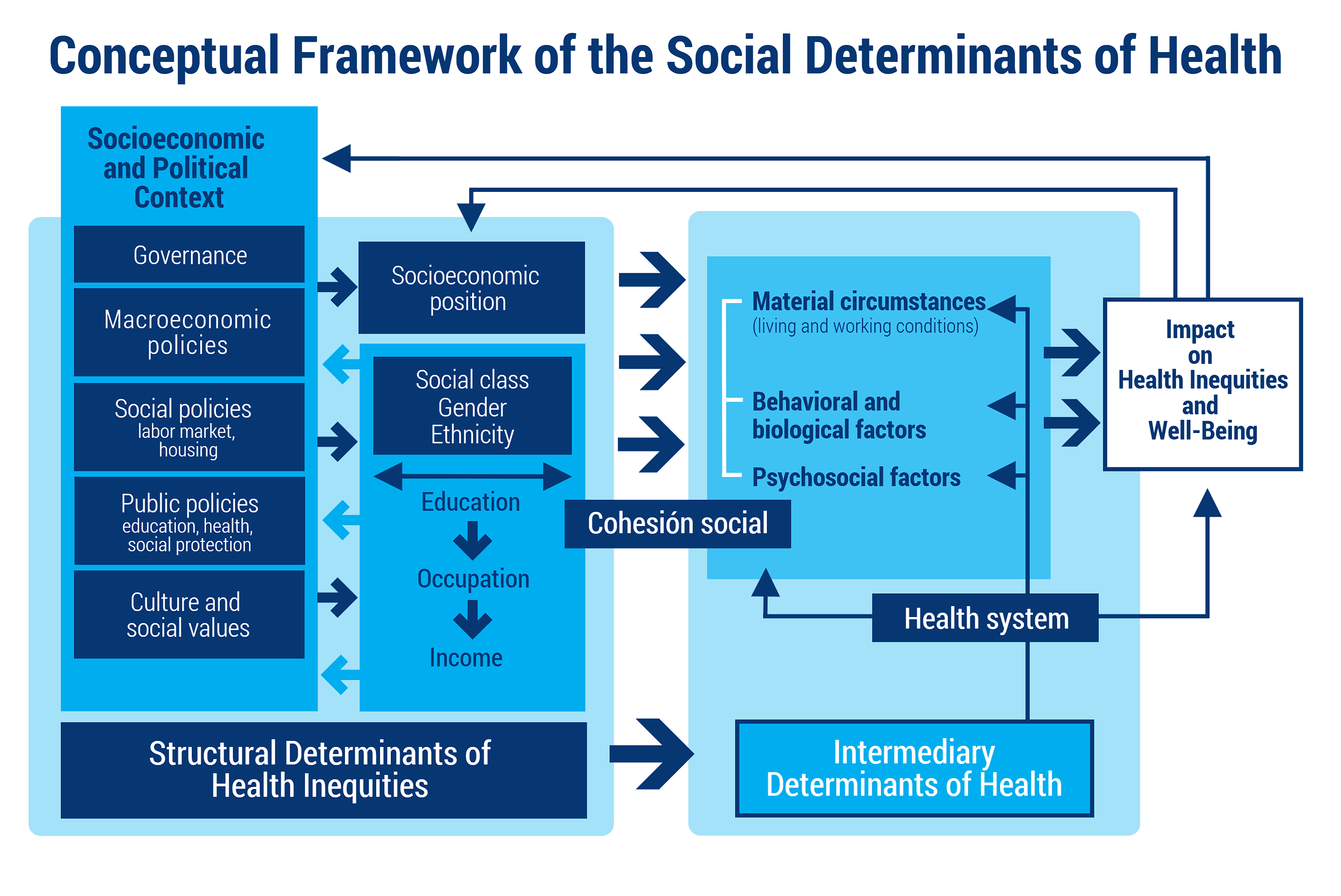
Image credit: PAHO/WHO. nd. Social Determinants of Health. https://www.paho.org/en/topics/social-determinants-health
The Economic and Social Impact of Mental Health
Neglecting mental health can have serious and lasting consequences, not only for individuals but also for entire societies. In the workplace, for instance, the economic and social costs of poor mental health are substantial. According to the WHO, depression and anxiety cost the global economy an estimated one trillion US dollars per year in lost productivity. More than 12 billion workdays are lost annually due to these conditions.
In addition, the lack of timely access to mental healthcare disproportionately affects vulnerable populations, including migrants, Indigenous communities, and those living in poverty or exposed to structural violence. Globally, fewer than 30 percent of individuals with mental health conditions receive adequate care. This gap is even wider in low- and middle-income countries.
Progress and Challenges in Promoting Mental Health
Fortunately, there is growing momentum toward a more inclusive and holistic approach to mental health. Stigma surrounding mental illness is gradually decreasing, and mental health is increasingly viewed as a core component of well-being, both individually and collectively. Open conversations in traditional and social media, along with public awareness and education campaigns, are playing a crucial role in shifting cultural attitudes and fostering greater understanding.
The current challenge is to continue advancing policies that reflect this broader understanding of health. This includes ensuring equitable access to mental health care and removing the barriers that prevent people from seeking support. It also involves integrating mental health into general healthcare systems and placing greater emphasis on prevention and early intervention, treating mental health as a fundamental part of the well-being of both individuals and communities.
Recognizing the connection between mind and body allows us to take meaningful steps toward building healthier, more compassionate, and more resilient societies for all.

Carolina Avilés Fernández is a psychologist with a Master’s degree in Legal and Forensic Psychology from Universidad Diego Portales. She is the Founding Partner of Corporación Adfinitas, an organization dedicated to raising awareness of and addressing the links between human mental health and animal protection in Chile. Her current work focuses on developing community-based and psychosocial strategies to support animal rescuers and influence public policy through a public health and social justice lens.


